

16. Dec. 2025
Project Report: Reliable Charging Infrastructure for E-Bus Operations in Remscheid

Bus Story
Insights
Innovations
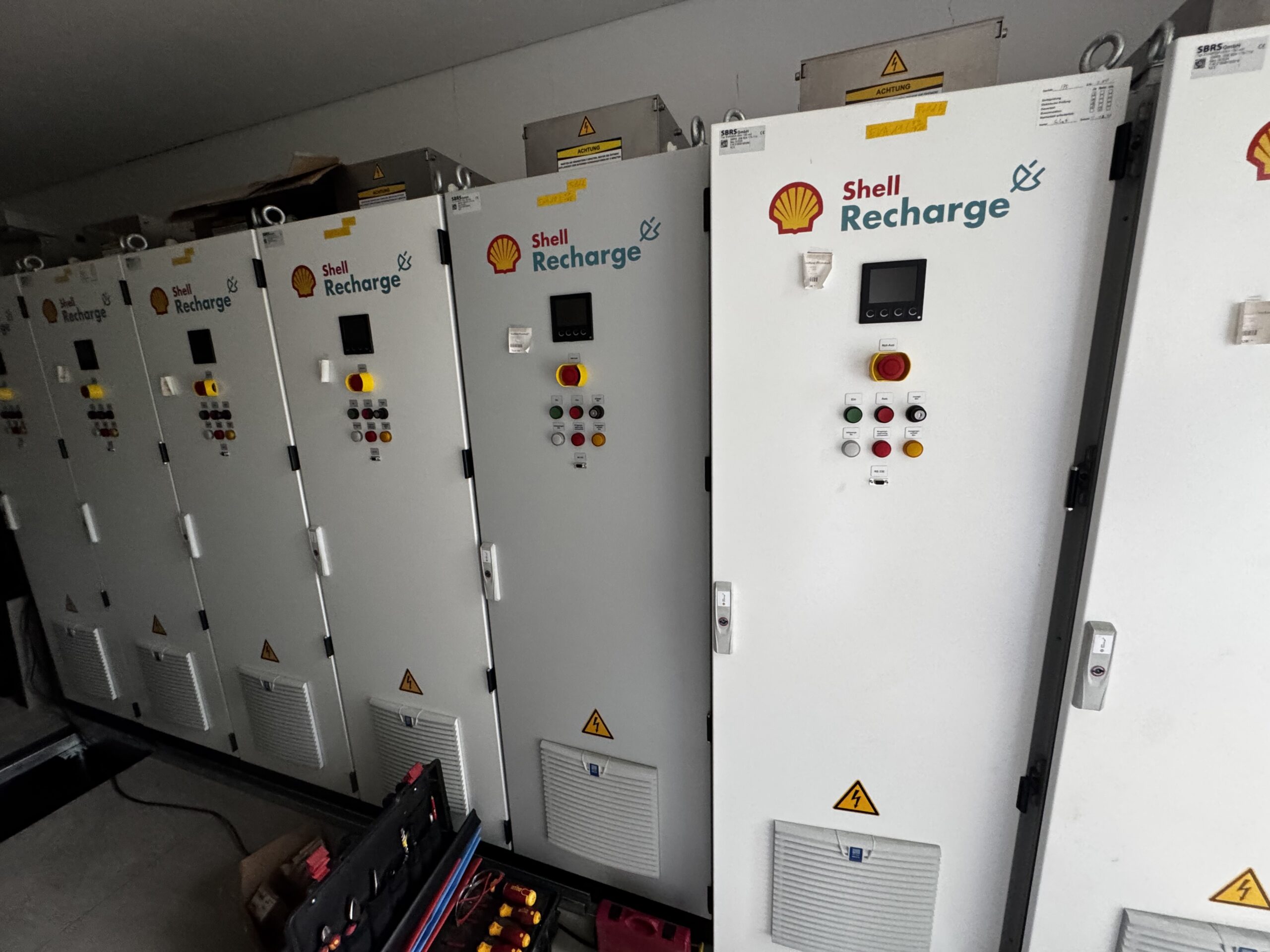
SBRS chargers in a row. They are standing inside the transformer house and give the energy for to charge.
The primary goal of this project was to establish a comprehensive and future-proof charging infrastructure for the e-bus operations of Stadtwerke Remscheid.
The implementation spanned three years and included both depots charging points and fast chargers at strategically important route locations.
During the first construction phase, a total of 24 depot charging points with slim chargers were installed at the depot. Twenty of these chargers provide an output of 150 kilowatts, while four units deliver up to 300 kilowatts. In addition, a fast-charging station was set up at the depot, offering two different charging options: via pantograph and CCS. To ensure flexibility in charging operations, four wall boxes were also installed in the parking hall as an alternative to pantograph charging. All extensive civil engineering work for this project was fully designed and executed by us.
Fast-charging stations with a capacity of up to 450 kW were installed at strategic route locations throughout the city. For the depot, a comprehensive emergency shutdown concept was developed. The hall consists of seven fire compartments, which were constructed parallel with our project. In the event of an emergency, activating the emergency shutdown system results in a compartment- or station-specific shutdown of the chargers. For example, only the chargers assigned to a specific fire compartment will be switched off.
A particularly noteworthy aspect is that the stations along the route could only be built at night after 10 p.m., as this required a special permit and complete road closure.
One of the greatest challenges during implementation was the extensive civil engineering planning, which took place simultaneously at the depot and in public spaces. Additional complexity arose from parallel work by various trades, particularly the construction of the seven fire compartments in the hall. Further requirements included: integrating the charging infrastructure into existing operations, developing a safety and emergency shutdown concept, custom manufacturing of charging masts, and combining different charging technologies such as pantograph and CCS. These challenges were successfully overcome through precise construction phase planning, intensive coordination with Stadtwerke Remscheid, and the management of all involved trades.
The project stands out for its forward-looking approach. Project Manager Musa summarizes his personal perspective as follows:
“I am particularly proud of how far we have already brought this project and how well the collaboration with Stadtwerke Remscheid and the various trades is working. Despite the high technical and organizational demands, we are successfully moving the project forward step by step to reliably achieve each milestone.”
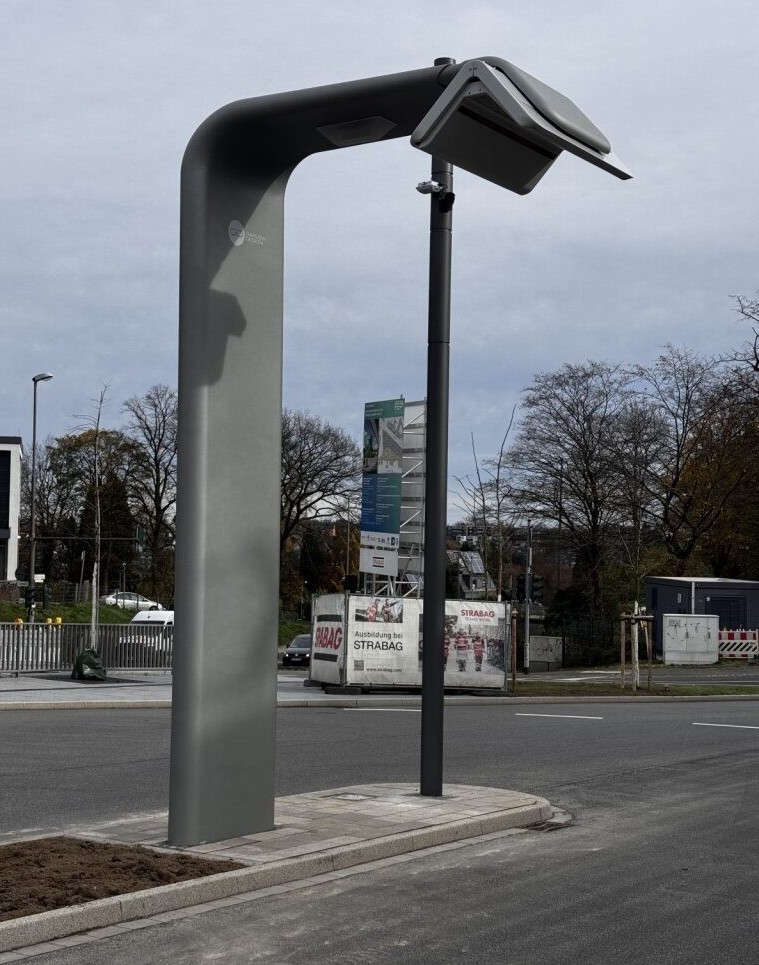
The Design mast (Pantograph) in the city Remscheid which charges the bus during their stop.
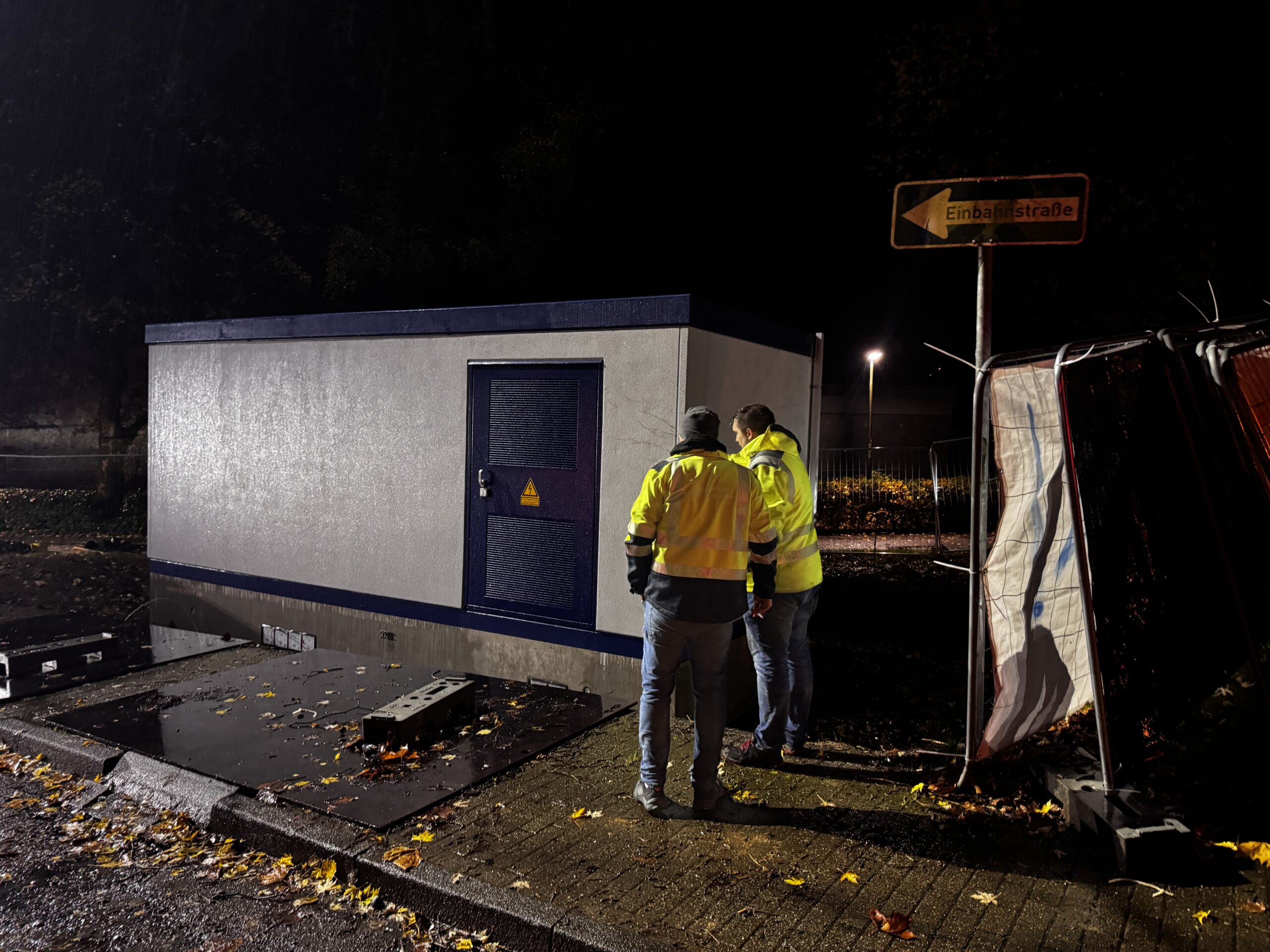
The transformer house where the Slim chargers are installed.