

07.August. 2026
Advancing heavy-duty EV charging through automated underground technology

Partner Stories
Trucks
Innovations
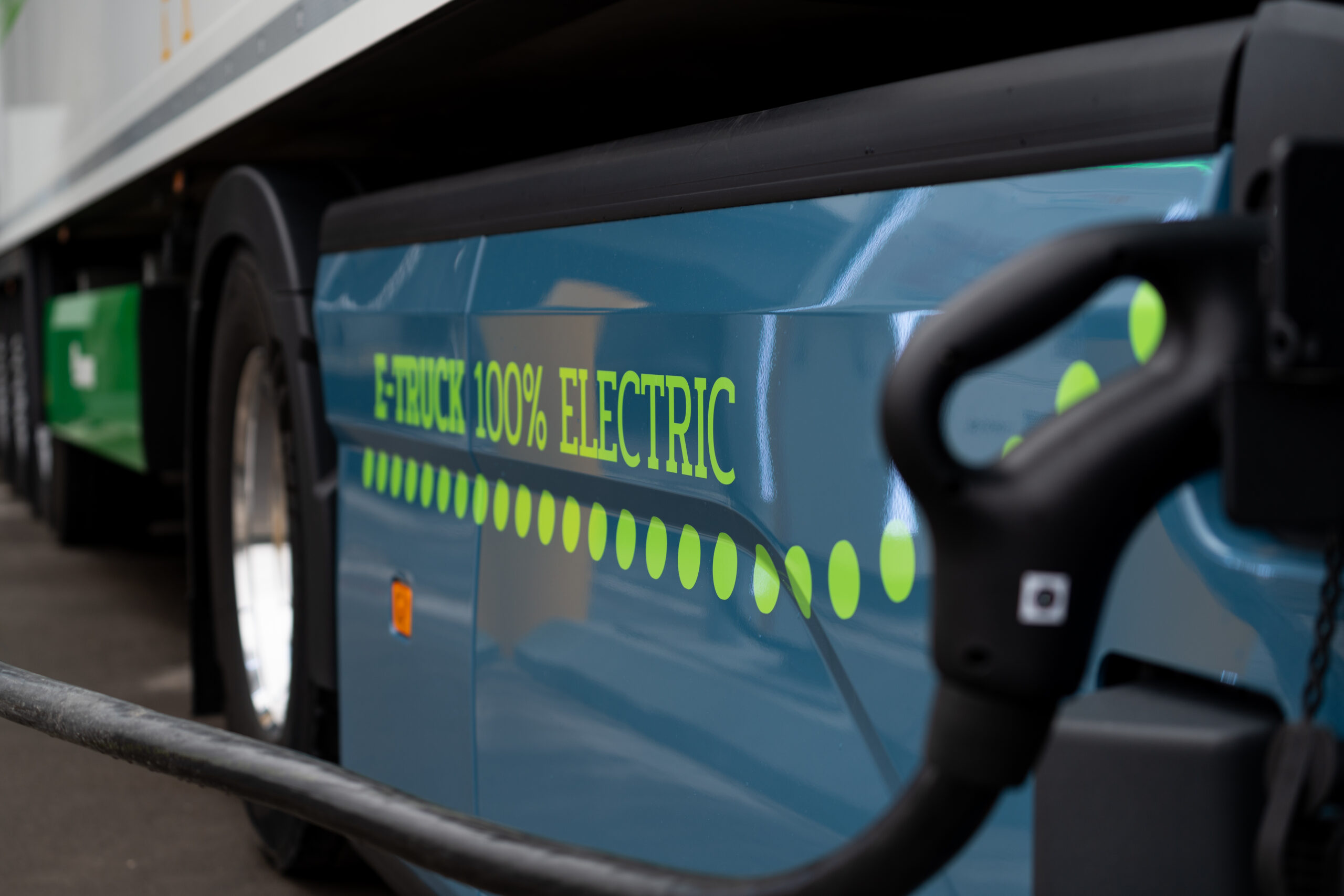
Picture: 100% E-Truck
What happens when you remove the cable from heavy-duty EV charging? In the MEGA-LADEN research project, SBRS explored a new way to power electric trucks – using an automated underground EV charging system for heavy-duty vehicles instead of traditional plug-in connectors.
When we picture the technology of tomorrow, it's often the visible breakthroughs that capture our attention. In the real world, progress often depends on less visible systems – the interfaces and infrastructure that make innovation practical.
The same is true in heavy-duty EV charging. While electric trucks are advancing rapidly, long-term adoption also depends on how efficiently and reliably those vehicles can recharge. In this area, fleets continue to face challenges around infrastructure availability, operational efficiency and evolving charging formats.
This was the context behind the MEGA-LADEN research project, designed to explore a different approach: automated underbody EV charging for heavy-duty vehicles.
Testing heavy-duty EV charging in real-world logistics environments
The MEGA-LADEN project reimagined the charge points and gantries used by the Combined Charging System (CCS). It showcased an automated, underground system designed to charge an e-truck completely without cables.
Video: FraunhoferIVI // Megawatt Charging for Trucks – Fully Automated & Reliable
FraunhoferIVI – YouTube
Instead of a driver climbing out of the cab and plugging their electric truck in manually, the system uses a ground-based contact unit that rises out of the floor and connects to the underside of the vehicle. The connection process is automated and controlled from inside the cab – making it in principle easier and safer for the driver to recharge their vehicle.
Working with partners including Fraunhofer IVI, SBRS developed the underbody charging system. SBRS then demonstrated the system at the Fraunhofer IVI test site in Dresden and at an operating logistics facility in Berlin. Designed to support charging power of up to 300kW, the system was tested under real operating conditions, providing valuable insight into the performance of automated charging.
The aim was not to supersede CCS, but to explore how effective a different heavy-duty EV charging connection could be — in this case, underneath the truck. The project also provided valuable insight into how automated, high-power charging systems perform in practice.
How the MEGA-LADEN project improved EV charging system architecture
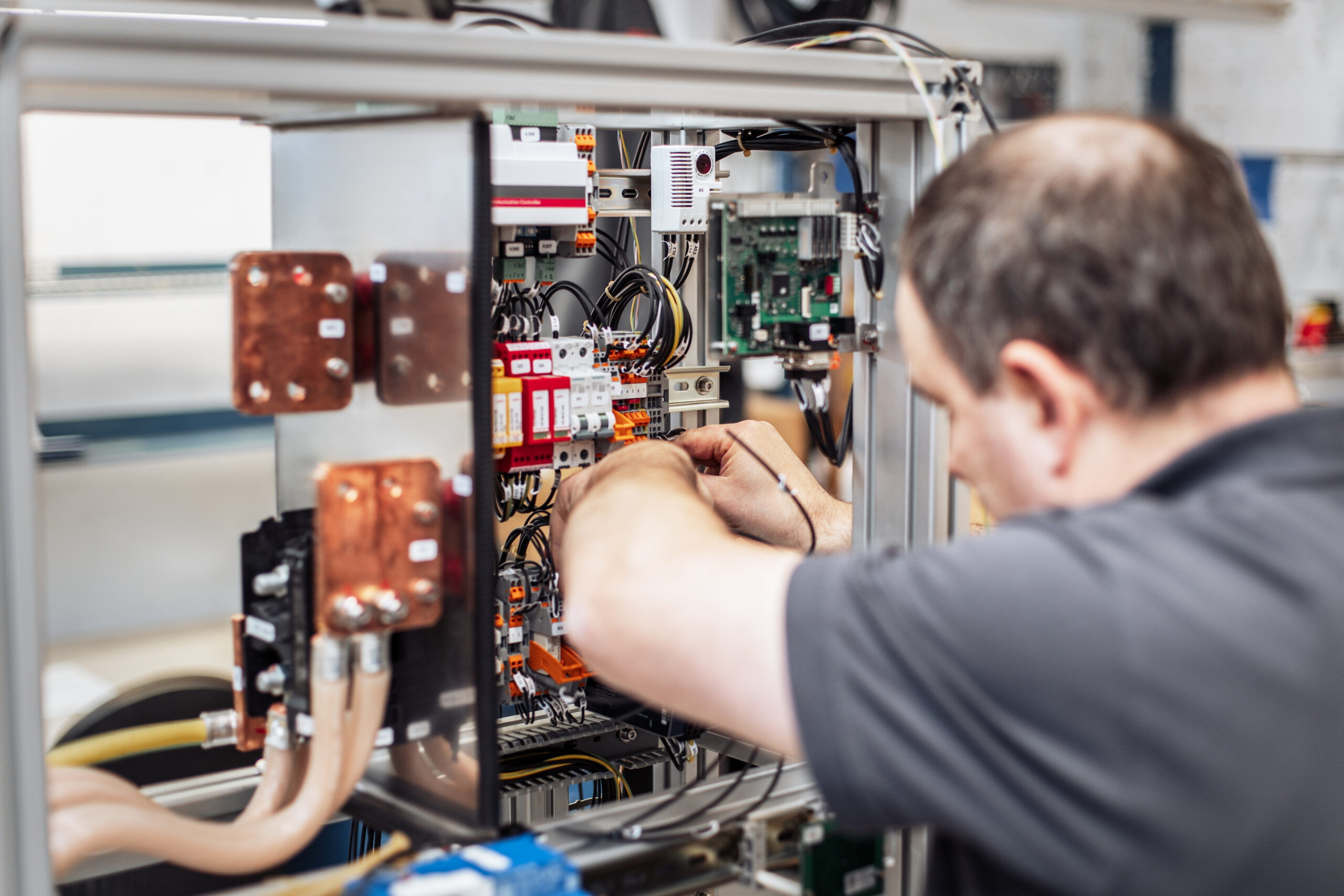
Picture: An Image from the production
As a full partner in the MEGA-LADEN consortium, SBRS brought practical charging expertise into what was – by design – a demanding test environment. Early in the project, our team had planned to reuse an existing high-power charging unit. But functional limitations and budget constraints quickly made it clear that this approach would not deliver the flexibility required.
Rather than scale back the ambition of the test, we went back to the drawing board – and came up with an innovation that would prove to have lasting value. Our teams swapped the “recycled” unit for two less powerful ones mounted in parallel, with one acting as the primary controller for the other.
This primary-secondary configuration allows multiple chargers to function as a coordinated system, enabling scalable power delivery without reducing the need for core infrastructure redesign.
Alongside this, we developed a standard interface that makes our heavy-duty EV chargers compatible with the different connectors available on the market. This means the system is designed to support interoperability across selected charging formats. So, whether drivers encounter CCS cables, the Megawatt Charging System (MCS) or other solutions like the MEGA-LADEN ground-based charger, they would be able to connect seamlessly to their electric trucks.
What automated EV charging means for heavy-duty electric truck infrastructure
We never expected MEGA-LADEN to become a mainstream charging format. But that was not why we pursued it. Instead, its value lay in the lessons learned from the project’s various technical challenges.
By exploring how charging hardware and control systems could be automated, our research on MEGA-LADEN has accelerated the development of innovations that we are now applying more broadly across SBRS projects.
For example, the coordinated (primary-secondary) charging concept is now used across most of our projects. This was a solution so effective that it has changed the way we approach our hardware – ultimately providing greater flexibility in how we meet the power needs of any given fleet.
The standard interface we developed – known as SATcom – also gives us the flexibility across heavy-duty EV charging formats. It means that we can also connect our chargers to any SBRS DC dispenser because they have a SatCom interface, which may help reduce integration complexity in some customised charging solutions.
Building more flexible and interoperable EV charging solution
While underbody charging may suit only specific use cases (such as for waste trucks or fire engines), the systems thinking behind it is already helping to optimise efficiency and supporting long-term adaptability of charging infrastructure.
As Europe’s fleets explore different routes to electrification, the need for greater standardisation and interoperability is likely to increase. Charging infrastructure must be flexible enough to support varied operating models, vehicle types and power requirements.
Together, the developments we have made on the MEGA-LADEN project support a more adaptable heavy-duty EV charging ecosystem. An ecosystem that aligns with Shell’s integrated charging network in helping to make EV charging more efficient.
By building flexibility into the core of our architecture, SBRS is working to help address the challenges of adopting electric trucks at scale – delivering compatible, interoperable charging solutions designed for long-term growth.
Get in touch to find out more about the project – and how our heavy-duty EV charging solutions can help you electrify your fleet operations.
The standard interface we developed – known as SATcom – also gives us the flexibility across heavy-duty EV charging formats. It means that we can also connect our chargers to any SBRS DC dispenser because they have a SatCom interface, which may help reduce integration complexity in some customised charging solutions.