

27th May 2026
SBRS launches PowerPack 500

Partner Stories
Insights
Innovations
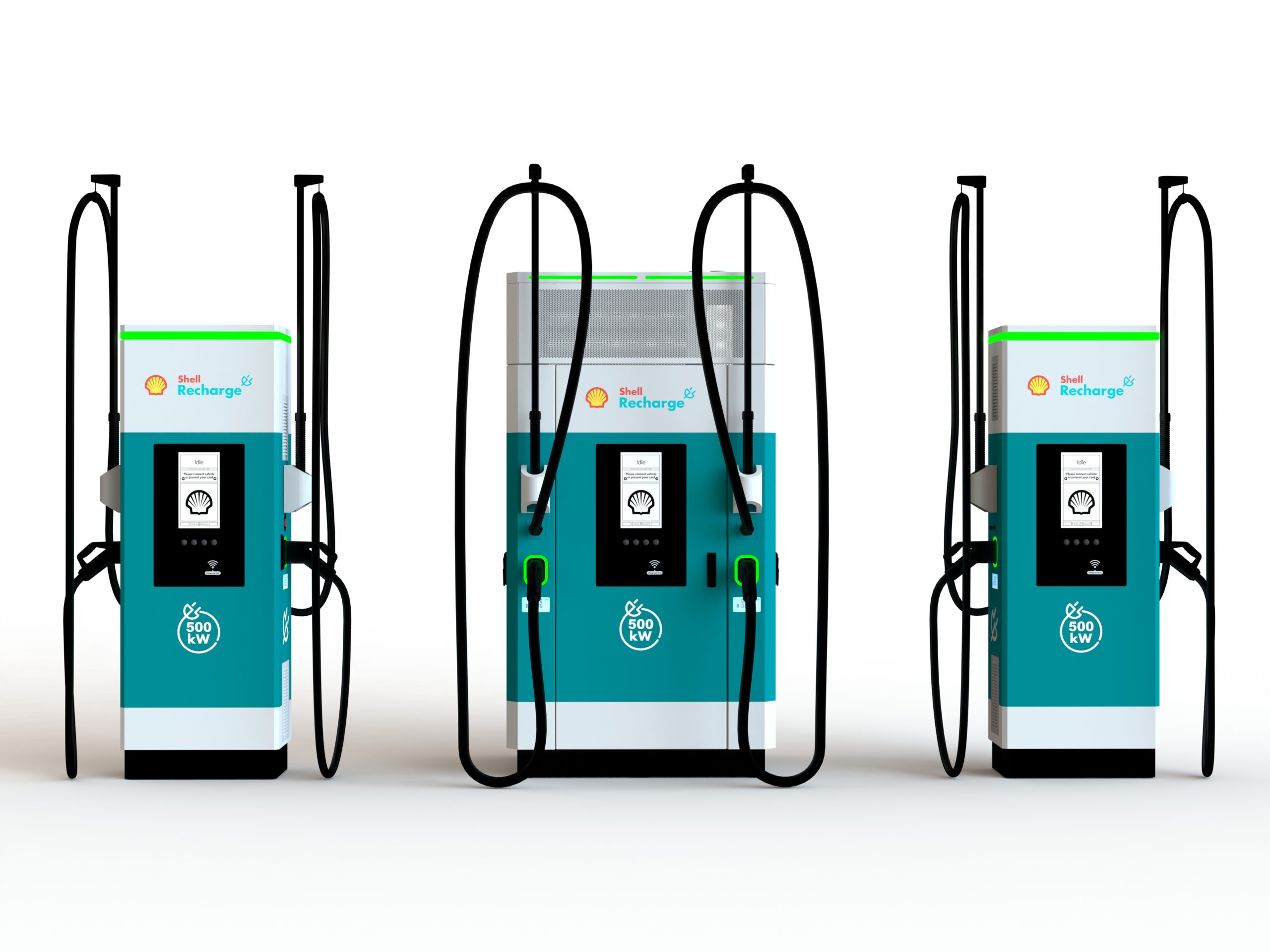
Launch, PowerPack500:
The PowerPack500 includes an all-in-one system with two dispensers
Scalable charging infrastructure as the key to the economic electrification of e-truck fleets
The electrification of heavy-duty transport is gaining increasing momentum.
Rising regulatory requirements, growing sustainability targets, and economic conditions are driving companies to gradually convert their fleets to electric powertrains. At the same time, the complexity of the required charging infrastructure poses significant challenges for many operators.
To address this challenge, an integrated solution is needed for the development and operation of high-performance charging infrastructure for heavy-duty commercial vehicles.
Holistic system design for heavy-duty transport
PowerPack 500 is designed as a modular overall system that integrates all key elements of modern charging infrastructure. The goal is to combine technical performance, operational efficiency, and economic optimization within a single solution.
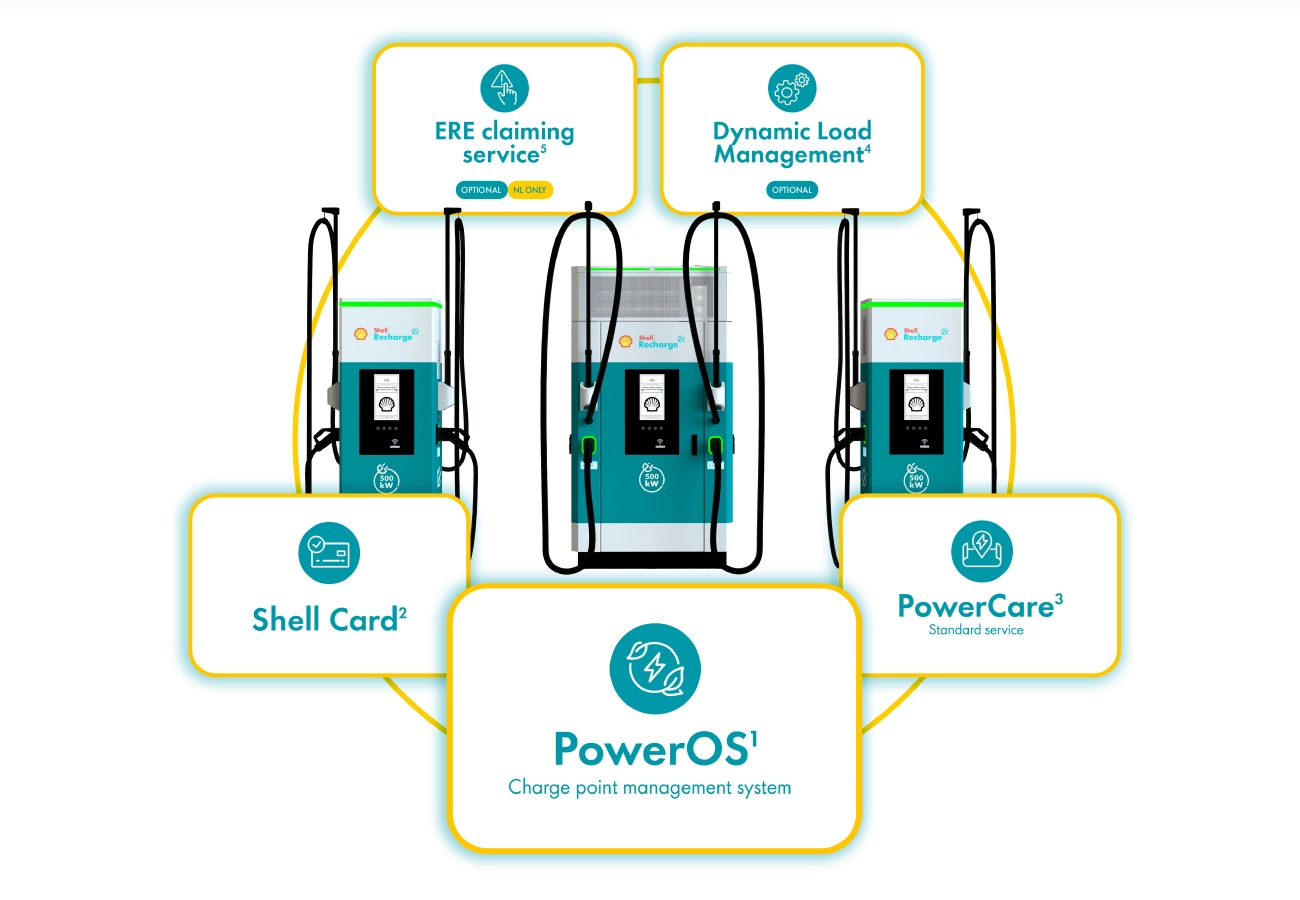
At the core is the PowerHub 500, a DC fast-charging solution specifically developed for the requirements of the heavy-duty segment.
It enables high charging capacities and is designed for intensive use, high availability, and long life cycles—critical factors in daily fleet operations.
This hardware is complemented by an integrated ecosystem:
- PowerOS (Charge Point Management System)
A central software platform for controlling, monitoring, and optimizing the entire charging infrastructure. It enables load management, transparency of energy consumption, and data-driven operational optimization. - PowerCare (Service and maintenance concept)
A comprehensive service approach combining maintenance, support, and rapid response times to ensure high system availability and minimize downtime. - ShellCard integration
Provides access to one of Europe’s largest integrated charging networks and simplifies billing, usage, and fleet management. - Flexible expansion options
Allow step-by-step scaling of the infrastructure and adaptation to different fleet sizes, operational profiles, and future requirements.
Through this integrated approach, PowerPack 500 reduces complexity in planning, implementation, and operation while establishing a foundation for long-term sustainable infrastructure solutions.
Connected charging infrastructure as an enabler for efficient fleet operations
A key differentiating feature of PowerPack 500 is the seamless integration of depot-based charging infrastructure with the Europe-wide charging network of the Shell Group, including public and semi-public charging points.
Via the ShellCard, fleet operators gain direct access to Shell’s integrated charging network. This enables:
- Increased operational flexibility through additional charging options along transport corridors
- Optimized route planning, especially for long distances or variable deployment profiles
- Reduced range uncertainty in daily operations
Furthermore, integration into the network opens up new economic opportunities. Depending on utilization and location, charging infrastructure can be made accessible to third parties. This creates the potential to generate additional revenue streams and accelerate the amortization of infrastructure investments.
From cost issue to economic opportunity: Focus on Total Cost of Ownership (TCO)
Economic viability is a key factor in the transformation of heavy-duty transport. PowerPack 500 directly addresses this aspect with a strong focus on optimizing the total cost of ownership (TCO).
Conrad Mummert, Head of SBRS GmbH, describes the development as follows:
“Electrification is evolving from a cost factor into a revenue generator. Under the right conditions, there is potential to achieve a TCO advantage of up to 10% compared to diesel.”
This assessment is based on a model by Shell analyzing the operation of a heavy-duty vehicle over five years with an annual mileage of approximately 116,000 kilometers.
Key factors influencing economic efficiency include:
- Optimized charging infrastructure (eDepot concepts) with a high proportion of depot-based charging (approx. 75%)
- Integration into public charging infrastructure for supplementary charging (approx. 25%)
- Smart charging to reduce energy costs and peak loads
- Network advantages, e.g., through preferential tariffs
- Infrastructure utilization through internal and external use
The actual savings potential depends heavily on individual conditions such as energy prices, infrastructure costs, fleet structure, and regional market conditions. Nevertheless, it is clear that the combination of integrated charging infrastructure and intelligent energy management is crucial for economic viability.
Strategic perspective: Electrification as a competitive advantage
With the current report “Electric trucking: From cost barrier to competitive advantage,” SBRS provides additional insights into the transformation of heavy-duty transport. The analysis shows that electrification is increasingly becoming relevant not only for regulatory reasons but also as a source of strategic competitive advantage.
A decisive factor is a holistic approach that integrates technology, infrastructure, operations, and business models—this is precisely where PowerPack 500 comes in.
Conclusion
With PowerPack 500, SBRS offers a scalable, integrated, and economically focused solution for the electrification of heavy-duty commercial vehicle fleets. The combination of high-performance hardware, intelligent infrastructure management, comprehensive services, and European network integration creates a solid foundation for the transition to electromobility in the heavy-duty segment.
For fleet operators, this means reduced complexity in implementation, increased operational reliability, and new potential for optimizing total operating costs—representing a decisive step toward an economically viable, electrified future of transport.

What could your fleet save?
Use the TCO calculator to compare diesel and electric truck costs.
Do you want to understand the full calculation behind your results? Learn more!
Get your detailed TCO result and see where you can save
Do you want to understand the full calculation behind your results? Learn more!
Indicative results based on model assumptions
This calculator provides indicative savings estimates for fleets investing in depot charging infrastructure. The model reflects the impact of depot optimisation, smart charging and energy management across Shell’s integrated network.
To explore the broader framework behind these results, learn more about Shell’s Integrated Charging Network.
If you have questions — or don’t yet have a depot solution in place — contact us and we’ll help you explore the right next steps.