

18th March 2026
Topping-Out Ceremony for the New BVG Bus Depot at Säntisstraße – Charging Infrastructure for Locally Emission-Free Bus Operations

Partner Stories
Insights
Press Release
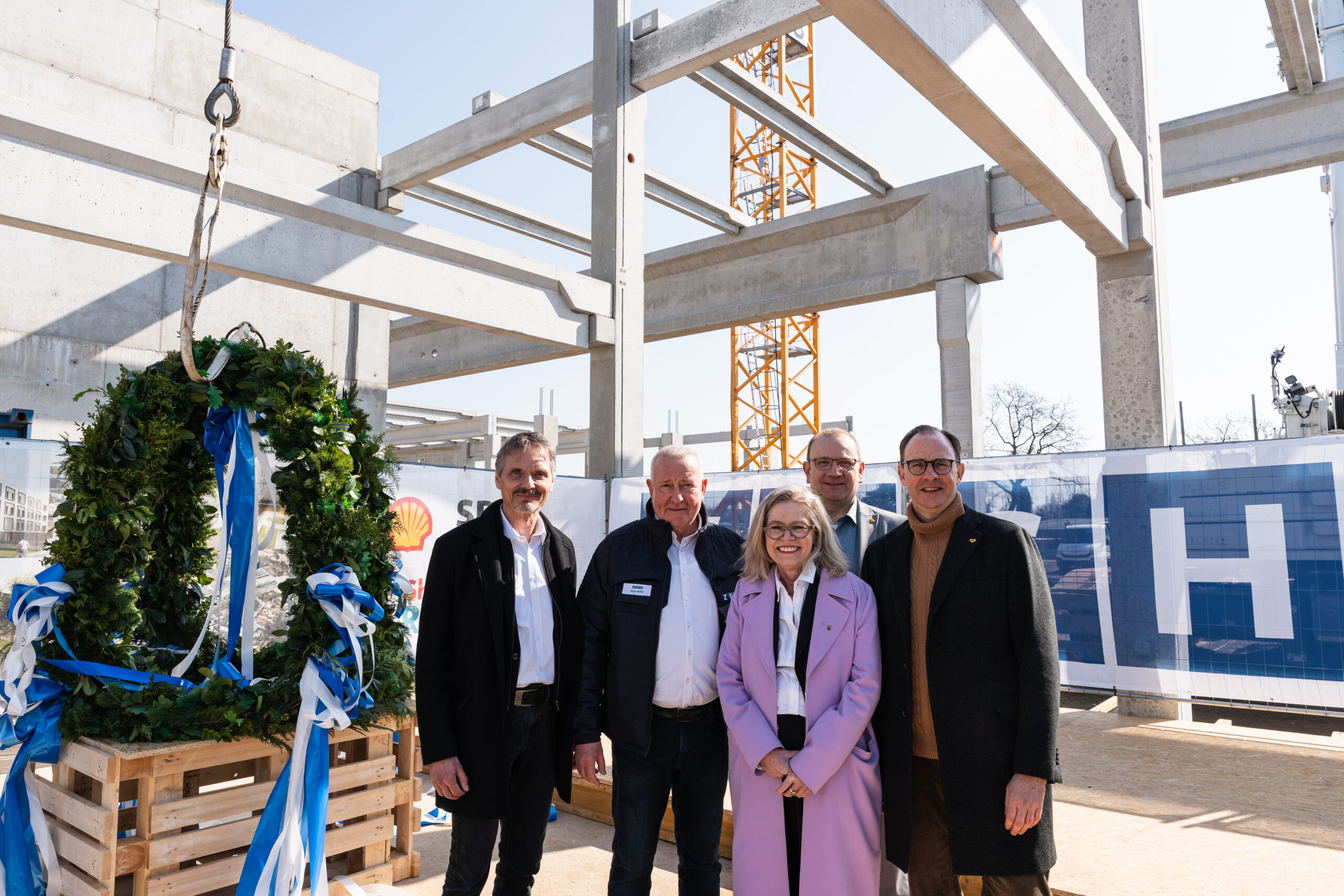
von links: Dr. Stephan Nahmer (Geschäftsführer SBRS), Ingo Hiller (ZECH Bau, Projektleiter ARGE BVG Säntis), Alexander Bonk (BVG-Projektleiter), Ute Bonde (Senatorin für Mobilität, Verkehr, Klimaschutz und Umwelt), Henrik Falk (BVG-Vorstandsvorsitzender)
Copyrights: © BVG, Florian Bündig
On 18th March 2026, the Berliner Verkehrsbetriebe (BVG) AöR celebrate the topping-out ceremony for the construction of their new central bus depot at Säntisstraße 95–129 in the Berlin district of Tempelhof-Schöneberg, Marienfelde. With the development of this highly modern site for locally emission-free bus transport, BVG is advancing the electrification of public transport in the capital.
The approximately 66,000 m² site will house a highly functional depot with a total gross floor area of more than 21,900 m².
“With this new construction, we are creating the infrastructural foundation for a bus fleet that is locally emission-free in operation, and consistently driving forward the transition toward a future-oriented public transport system in Berlin,” emphasizes Ingo Hiller, Senior Project Manager at ZECH Bau SE, Berlin branch. “Delivering a turnkey depot for an all-electric bus fleet demonstrates how rapidly the planning of high-performance charging infrastructure for large commercial vehicle fleets is advancing. All the more, we are pleased to implement our innovative and flexible charging solutions in the federal capital,” adds Dr. Stephan Nahmer, Managing Director of SBRS GmbH.
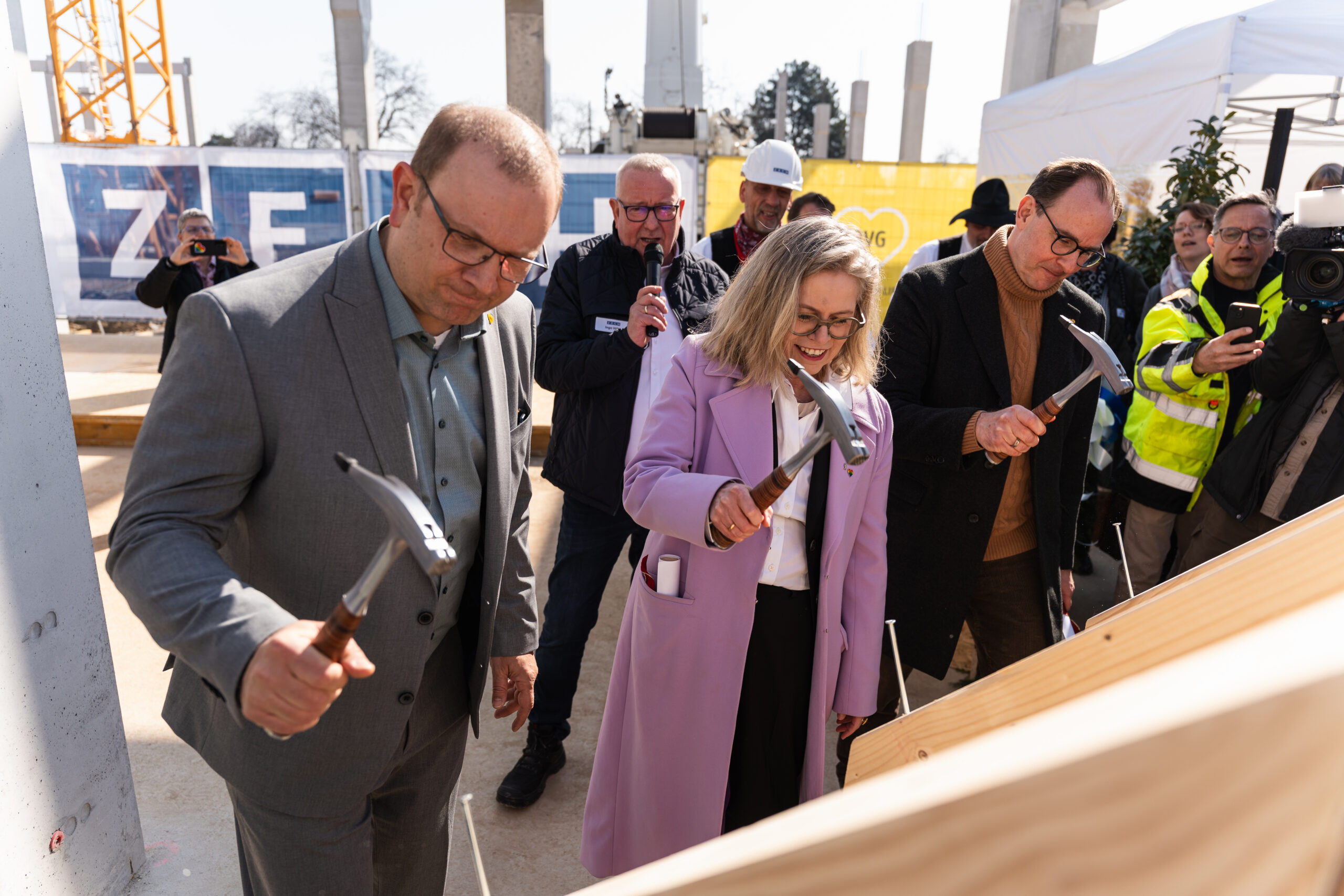
von links: Alexander Bonk, Ute Bonde, Henrik Falk
© BVG, Florian Bündig
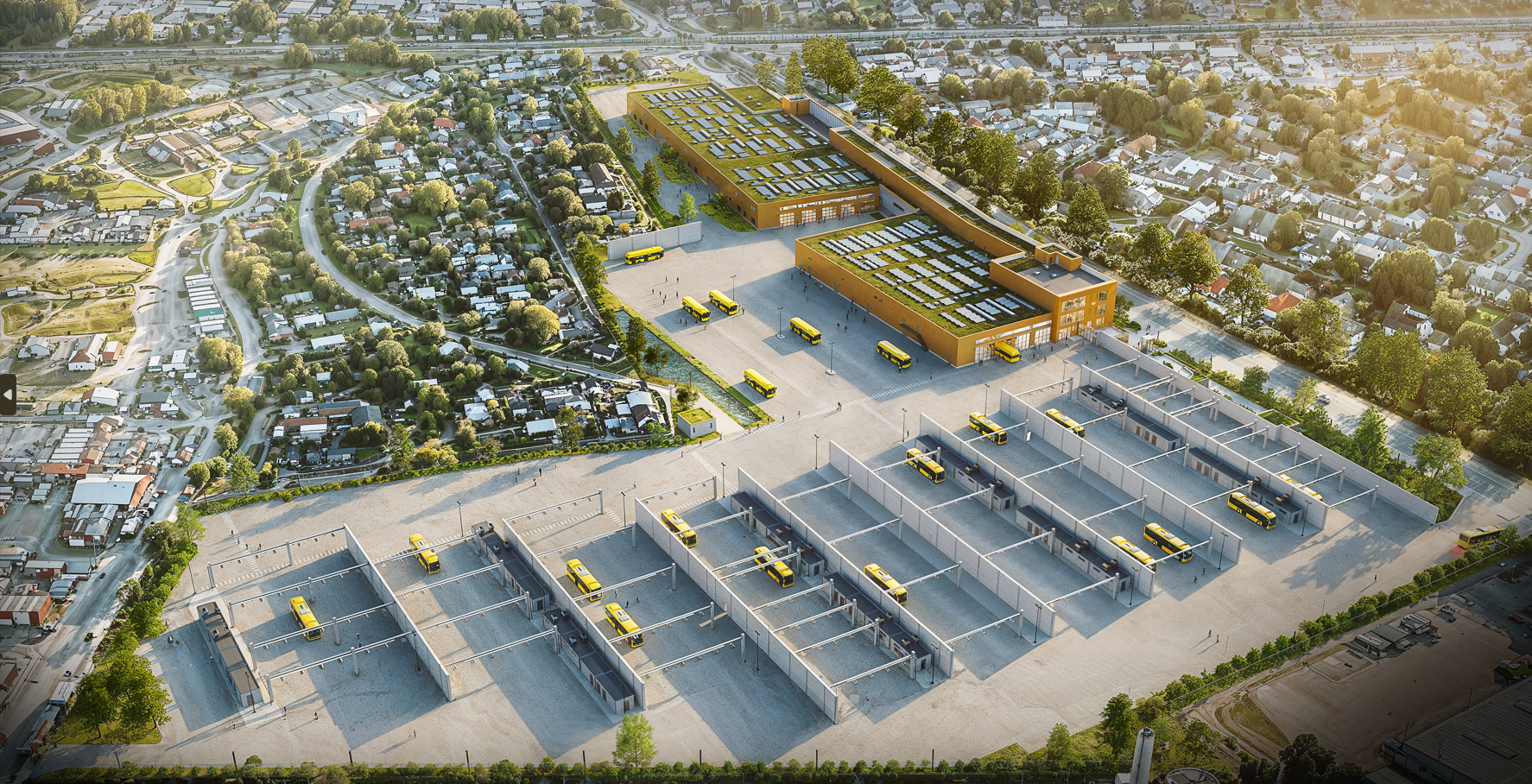
Visualisierung E-Bus-Betriebshof Säntisstraße
© Sweco
The project is being realized by ARGE BVG Säntis, consisting of Zech Bau SE and SBRS GmbH, acting as general contractor
Project management is provided by Drees & Sommer, while Sweco GmbH serves as general planner. With the new depot, BVG is advancing the electrification of public transport in Berlin.
ZECH Bau SE
ZECH Bau SE is part of the ZECH Building business unit, which brings together all construction expertise within the Zech Group SE. The group acts as a strategic management holding company that combines three business units with their operational management entities. Its diverse range of services makes the company a strong partner in the areas of Building, Real Estate, and Hotels. As a broadly diversified corporate group, it focuses on the entire value chain around real estate. With its medium-sized, owner-managed structure, the Zech Group is able to seize opportunities quickly and adapt its structures efficiently to market requirements.
SBRS GmbH
Since 2022, SBRS GmbH has been a wholly owned subsidiary of Shell Deutschland GmbH. As a turnkey solution provider, SBRS delivers customized charging infrastructure solutions—from initial planning and installation to operation, service, and maintenance. Customers receive a reliable and future-proof complete solution from a single source.
Whether for municipalities, transport operators, logistics, or industrial sectors, SBRS helps companies efficiently electrify their fleets and reduce operating emissions. The company ensures optimal availability of the charging infrastructure. With decades of technical expertise and a strong commitment to innovation, SBRS guarantees fast charging times, maximum operational readiness, and top quality.
The portfolio includes charging and software solutions for e‑buses, e‑trucks, and maritime applications, as well as comprehensive project and operational services. In doing so, SBRS makes a key contribution to the electrification of the transport sector, helping fleets transition to lower-emission operations.