

20th of August 2025
Successful Factory Acceptance Test of Charging Devices for BVG Projects in Berlin

Partner Stories
Insights
Press Releases
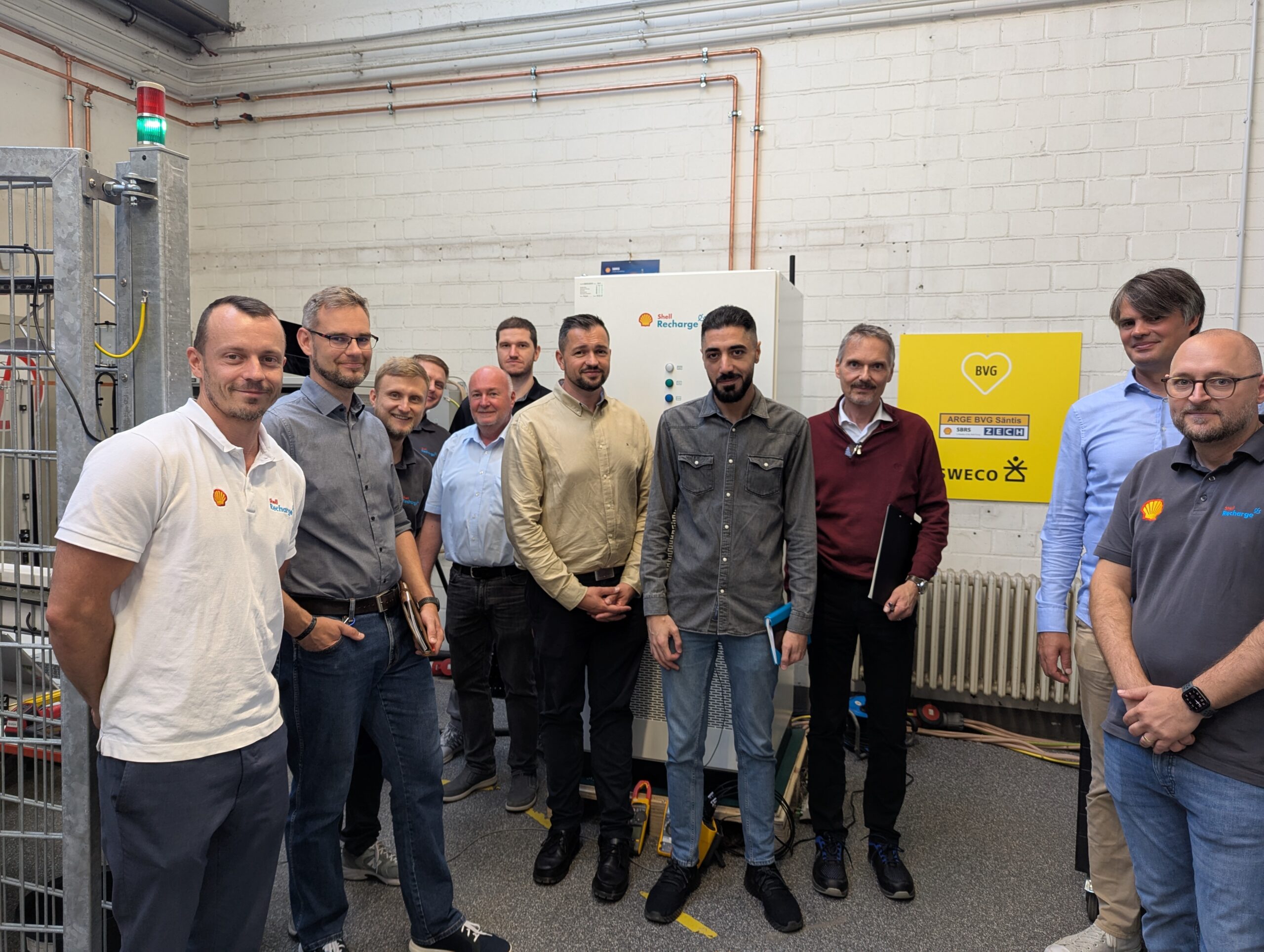
The involved people for the acceptance test – including SBRS members and BVG colleagues.
On August 20, 2025, the Factory Acceptance Test (FAT) for the charging devices used in the Berlin-based BVG projects Stella and Säntisstraße was successfully conducted at SBRS’s main site in Dinslaken.
The focus was on the 300 kW charger developed for the Stella project, which involves opportunity charging stations distributed throughout the city. This charger will also be deployed at the Säntisstraße depot, operating at a reduced output of 150 kW.
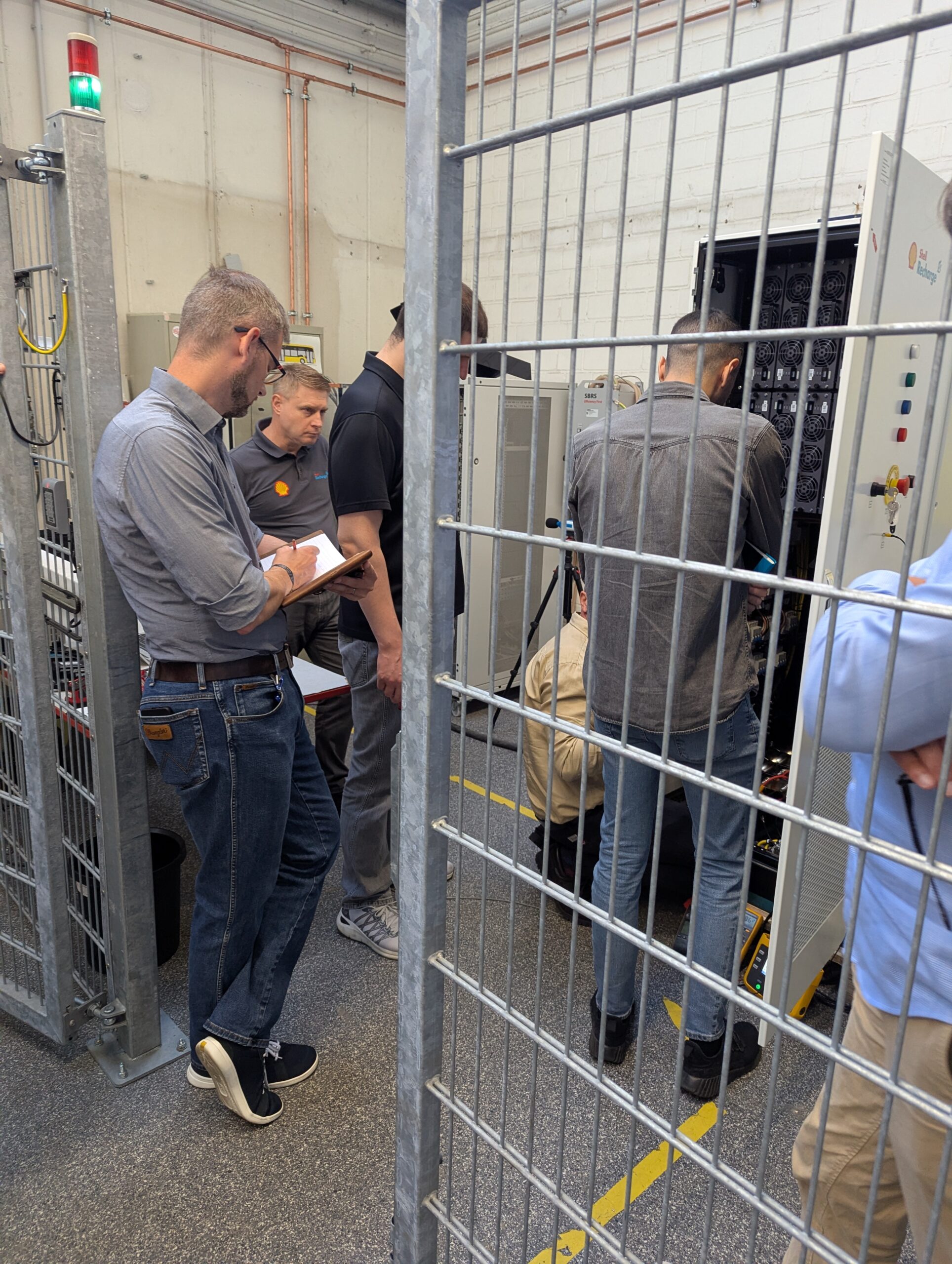
Prior to the FAT, the charger had already been presented online as a 3D model to illustrate the underlying design principles. A key element of the FAT was the inspection of the charger’s internal layout, particularly the accessibility and arrangement of components to ensure ease of maintenance. Dr. Martin Gollbach, CTO of SBRS, provided detailed insights into the charger’s signaling system and internal structure.
The agenda also included a functional test, an initial partial load test, and a preliminary acoustic measurement at reduced power. All tests were completed successfully and without issues.
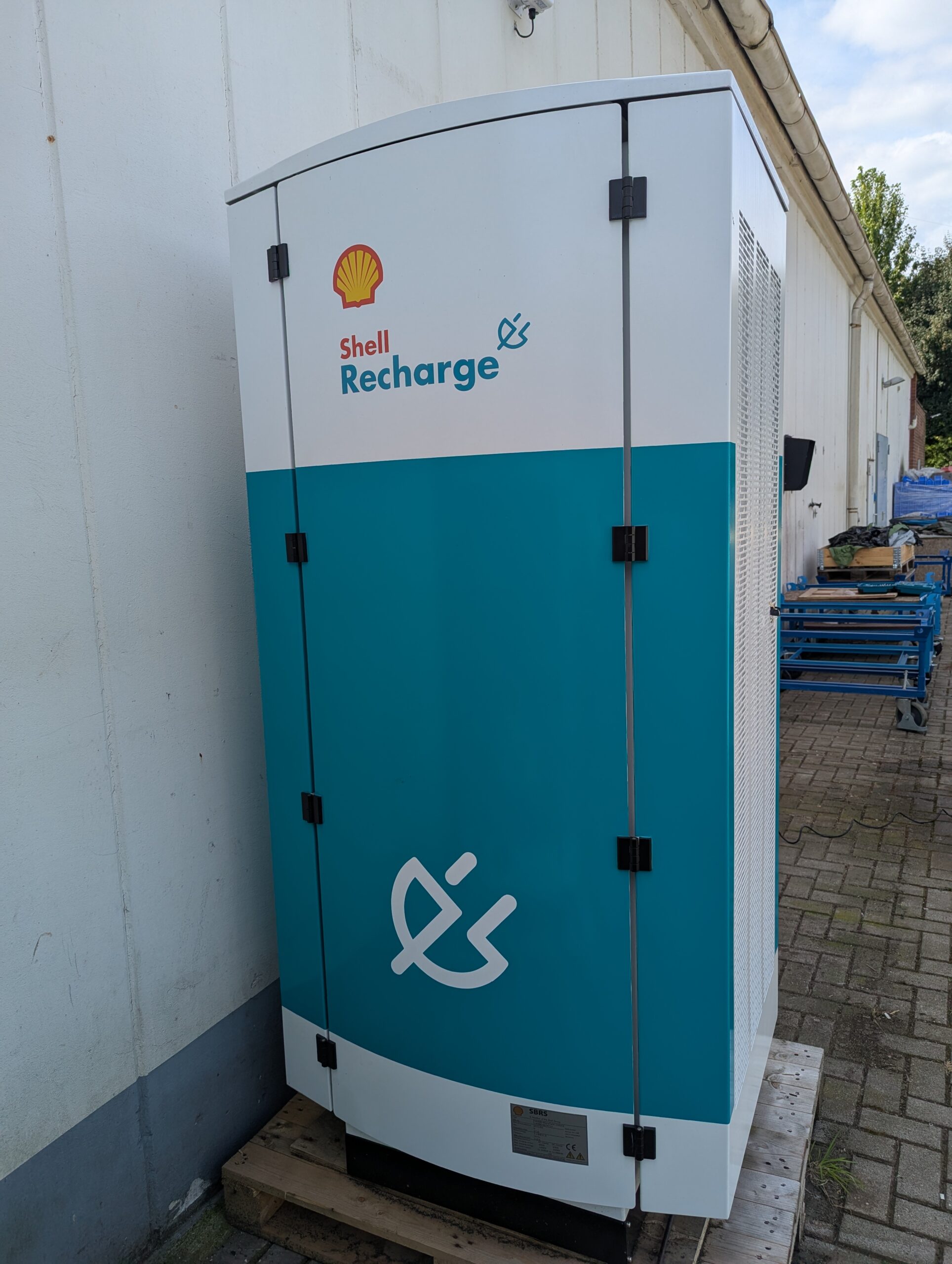
At the conclusion of the FAT, the BVG team was introduced to the “Moca” charger – a 300 kW test unit designed for outdoor use. It incorporates the same technology as the tested charger and is scheduled for installation later in 2025 as part of the ongoing project.
The next phase involves continuing construction preparations and implementation at various locations across Berlin and at the Säntisstraße depot. These efforts will enable the installation of the charging infrastructure and ensure that BVG’s new electric buses can be reliably charged on site.